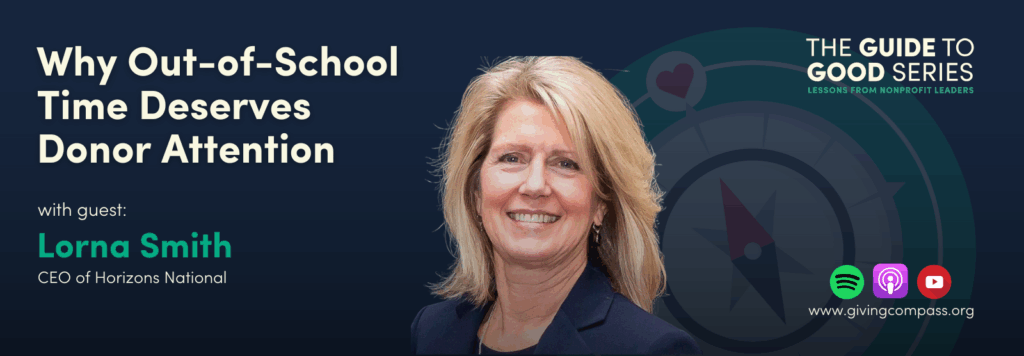
In a recent episode of The Guide to Good series, Brandolon Barnett, Head of Innovation and Philanthropy at Giving Compass, sat down with Lorna Smith, CEO of Horizons National, to explore one of the most overlooked yet transformative opportunities in education: out-of-school-time learning. Their conversation highlighted why these programs are essential—and how donors can help fuel a future where every child has the chance to thrive.
A Legacy Rooted in Opportunity
Horizons began more than 60 years ago at an independent school in Connecticut during the Civil Rights era. Teachers there opened their classrooms to children from neighboring communities who had limited access to resources, determined to create a path toward greater opportunity. What started as a small effort to share enrichment, academic support, and a sense of belonging quickly showed powerful results.
Three decades later, backed by data demonstrating real impact, volunteers helped bring the model to new communities. Today, Horizons programs operate nationwide, anchored by a six-week summer session that blends rigorous academics with enrichment, outdoor play, and daily swimming. School-year tutoring, Saturday academies, and field trips create year-round support that helps students stay engaged, confident, and ready to learn.
Why Out-of-School-Time Matters More Than Ever
Students spend only about one-fifth of their waking hours in school. The remaining 80%—after 3 p.m., on weekends, and during summer—is shaped largely by family resources. Parents understand that learning doesn’t pause when the school bell rings, and demand for tutoring, enrichment, and summer programs has surged since the pandemic. But nonprofit and public programs can’t keep up.
The summer months are especially critical. Students typically lose two months of reading skills over the summer, and those from lower-income families tend to lose even more due to limited access to structured learning. Because these losses accumulate year after year, the result can be a two-year achievement gap by high school.
At the same time, higher-income families now spend nearly nine times more on out-of-school learning than lower-income families, widening opportunity gaps even further.
The difference access makes is profound:
- Children with consistent out-of-school learning gain up to 6,000 extra hours of learning by sixth grade.
- Without it, they may test 2.5–3 grade levels behind their peers.
Horizons helps reverse that trend. Students gain an average of two months in reading and math each summer, and those who participate from kindergarten through eighth grade accumulate the equivalent of 2.5 additional years of learning.
What Makes Horizons National Unique
Horizons takes a long-term approach: when families join, they are welcomed into a nine-year commitment. With experienced lead teachers returning each year, a 5:1 student-to-staff ratio, individualized instruction, and dedicated learning specialists, students receive tailored support that evolves with them.
Swimming is another signature element. Every Horizons student learns to swim—a critical life skill, given that drowning is a leading cause of childhood death. But the impact extends beyond safety. As Lorna shared, watching students transform fear into confidence in the water builds courage that shows up in all areas of life. Research also shows early swimmers demonstrate stronger literacy, math, and motor skills.
What’s at Stake Without These Programs
When programs like Horizons aren’t available, the consequences reach far beyond individual students. Without equitable enrichment and academic support, entire communities face long-term challenges—from limited career opportunities to intergenerational cycles of poverty. Our future workforce, innovation, and civic health all depend on investing in today’s young people.
A Shifting Funding Landscape
In the years following pandemic school closures, federal funds such as the American Rescue Plan helped expand summer and after-school programs. But that funding has expired while student needs remain high. Foundation giving to K–12 education has also declined, particularly among corporate funders. This makes individual philanthropy—annual support, multi-year commitments, and community partners—more essential than ever.
How You Can Get Involved
There are many ways to support Horizons students and programs:
- Volunteer your time or expertise
- Make an annual or multi-year philanthropic commitment
- Help build partnerships with mission-aligned corporations
- Offer in-kind support such as products or professional services
- Engage your networks to increase visibility
- Introduce others to Horizons’ work and invite their support
Programs like Horizons National don’t just support students—they strengthen communities and build pathways toward brighter futures. Your involvement can help ensure every child has the opportunity to learn, grow, and thrive all year long.
Here are a few recommended articles related to best practices in giving:
Diverse Local Programs Drive One National Commitment to Joyful Learning
Bringing Playful Pre-K to Students Regardless of Socio-economic Status